In terms of strength and durability, cement is one of the most important building materials. An important set of tests must be conducted on it to ensure it is safe for use in buildings, bridges, and roads. One of the most important tests is the soundness test of cement, which determines whether it retains its shape after setting. This test checks whether the substance doesn’t expand too much, which could lead to cracks and the building falling apart. If engineers and workers understand why this important cement test is needed, they can maintain high construction quality and safety.
How do I do the Cement Soundness Test?
The soundness test for cement checks whether dried cement paste maintains its shape after setting without becoming too large. If cement isn’t strong enough, it can grow over time if it has too much free lime, magnesia, or other compounds. This can make the structure weaker and cause cracks.
During the soundness test, the cement is tested to see whether it remains stable after mixing with water. Concrete structures can deteriorate over time if the cement sets too much.
Why is the Test Being Given?
The main purpose of the soundness test is to detect any lime or magnesia that is not fully mixed with the cement. These things can take a long time to react with water, which can delay the concrete from setting as it should.
Among the many types of cement tests is the soundness test. It prioritises long-term security over short-term strength. Soundness tests check whether the substance won’t break or change shape when the volume changes. Compressive strength tests determine how much weight it can hold.
Soundness Test of Cement Apparatus and Procedure
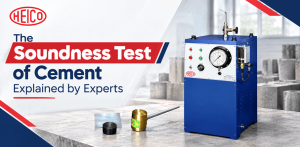
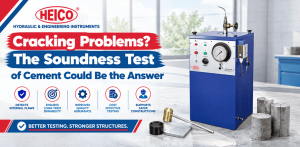
The Le Châtelier method is used to test the soundness of a cement apparatus. The cylinder is made of split metal and has arms that show how much the cement paste has grown after being filled, covered, submerged in water, and heated. It is important to ensure that the results are accurate, the equipment lasts a long time, and it is easy to use in civil engineering labs. HEICO makes strong tests for this purpose.
Important for Building Projects
The stability test of cement is very important. If the cement isn’t strong, it might look strong at first, but it can crack over time, which makes buildings last less long. Construction workers conduct this test to reduce risks and ensure that buildings and other facilities are safe. HEICO helps ensure that building projects are done well by developing new testing tools for cement that meet industry standards.
Conclusion
Ensuring that cement is of good quality is important for ensuring it will last a long time and stay strong. This is one of the most important types of cement tests because it keeps building projects safe from problems that could happen if the cement grows. An exact test of the soundness of the cement equipment makes sure that the results are correct and can be trusted. Construction professionals can obtain high-quality testing equipment from reputable companies such as HEICO.
Also read: What Is Cement Testing and Procedure?